Written by Bhumyamca Armizan Hadi, Chief of the Department of Common Analysis of the Eastern Partnership
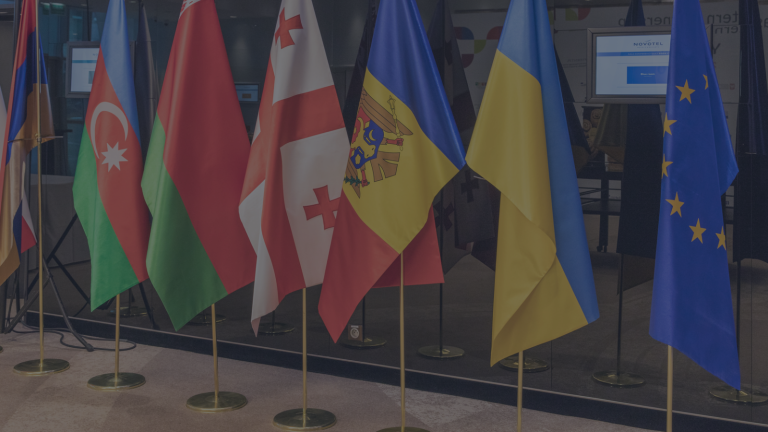
The generational transition within the European agricultural landscape is currently unfolding through the systematic integration of the Eastern Partnership (EaP) countries Ukraine, Moldova, Georgia, Armenia, and Azerbaijan into the European Union’s regulatory and economic orbit. This process, catalyzed by the profound geopolitical shifts of 2024 and 2025, marks a departure from a model of peripheral cooperation toward one of deep institutional alignment and, for several partners, full membership accession.1 The agrifood sector stands at the center of this transformation, serving as both a primary driver of economic resilience for the partner states and a significant structural challenge for the Union’s Common Agricultural Policy (CAP). The integration of these diverse systems requires an exhaustive harmonization of sanitary and phytosanitary (SPS) standards, a reconfiguration of land ownership frameworks, and a commitment to the sustainability goals of the European Green Deal and the Farm to Fork Strategy.3 This analysis evaluates the mechanisms of this integration, the structural disparities between the partner systems, and the strategic financial instruments deployed to facilitate this historic realignment.
Geopolitical Imperatives and the Strategic Evolution of EU External Action
The year 2024 represented a definitive turning point in the European Union’s external action, as the focus shifted toward economic security, trade diversification, and the reinforcement of international partnerships in response to global volatility.1 The EU’s commitment to its eastern neighbors has moved beyond humanitarian aid toward a new economic foreign policy aimed at boosting competitiveness and ensuring regional stability. A primary vehicle for this strategy is the Global Gateway, which mobilizes significant investment to deliver tangible benefits to populations while aligning local production with European standards.1
In 2024, the EU remained the world’s largest provider of official development assistance, with the European budget and Member States collectively providing €88.7 billion, representing 42% of global assistance.1 This financial power is strategically channeled through the Eastern Partnership framework to foster resilience. The “Team Europe” approach has been instrumental in addressing poverty, sustainable development, and security simultaneously, particularly in the context of Russia’s continued war of aggression against Ukraine.1 For the agrifood sector, this implies not only the repair of infrastructure but
the wholesale adoption of the EU’s “rules-based international order” within agricultural markets.1
The Accession Framework and the Association Trio
The integration process is tiered, with Ukraine, Moldova, and Georgia—collectively known as the Association Trio pursuing the most ambitious paths. The formal launch of accession negotiations in June 2024 with Ukraine and Moldova signaled a new phase in European history.8 By September 2025, both nations had successfully completed the bilateral screening process, a rigorous evaluation of their capacity to assume the obligations of EU membership across 33 negotiation chapters.2
| Country | EU Accession/Integratio n Status (as of late 2025) | Key 2024-2025 Milestone | Primary Agricultural Challenge |
| Ukraine | Candidate Negotiating | Screening completed Sept 2025; Upgraded DCFTA Oct 2025 | Integration of agro-holdings with CAP8 |
| Moldova | Candidate Negotiating | Screening completed Sept 2025; €1.9B Growth Plan adopted | Modernization of smallholder irrigation 11 |
| Georgia | Candidate (Stalled) | Status suspended following democratic backsliding in 2024 | Food safety and SPS enforcement6 |
| Armenia | Enhanced Partner (CEPA) | Strategic Agenda adopted Dec 2025 | Trade diversification and climate shocks14 |
| Azerbaijan | Strategic Energy Partner | Middle Corridor development; Energy MoU | Non-oil diversification (agriculture)16 |
The divergence in the paths of the Trio became evident in the 2025 Enlargement Package. While Ukraine and Moldova were commended for their “remarkable resilience and political determination,” Georgia was identified as having experienced “serious democratic backsliding,” leading the European Commission to scale down political contacts and suspend assistance directly benefiting the authorities.13 This highlights that agricultural integration is fundamentally tied to the “Fundamentals” cluster of negotiations, which includes the rule of law and the independence of the judiciary.2
Ukraine: The Agricultural Giant and the CAP Realignment
Ukraine’s integration presents the most significant structural challenge for the EU’s agricultural system. The country possesses the agro-climatic potential to be a dominant player in global markets, and its accession would massively increase the EU’s agricultural land area.5Internal European Council studies suggest that Ukraine’s membership would make it the largest beneficiary of the CAP, potentially requiring a reduction in farm subsidies for existing Member States by approximately 20% to maintain fiscal balance.5
The Dual Structure of Ukrainian Agriculture
The Ukrainian agricultural sector is characterized by a stark dualism that complicates the adoption of the CAP, which was originally designed for Western European models of family farming.5 The sector is dominated by approximately 70 large agro-holdings that operate on 25% of the country’s arable land.10 These entities are vertically integrated, using state-of-the-art machinery and storage facilities to grow commodity crops primarily cereals and oilseeds for export.10
In contrast, the social and economic fabric of rural Ukraine depends on approximately 900,000 unregistered smaller or family farms.10 These small-scale producers generate most job opportunities in rural areas and are responsible for a significant share of high-value-added products, yet they often operate in the informal sector without access to state support or bank financing.10
| Sector Segment | Land Share/Role | Primary Products | Key Constraints |
| Large Agro-holdings | 25% of arable land | Cereals (Wheat, Maize), Oilseeds | Market dominance; Environmental impact 10 |
| Small/Family Farms | Fragmented; Job creation | Potatoes (98%), Fruit (86%), Milk (60%) | Informal status; Lack of finance10 |
| Rural Employment | 17% of working population | Social stability | Poverty (34%); Lack of land market10 |
The EU’s integration strategy, articulated in the “EU Support to Agriculture and Small Farm Development in Ukraine” program, focuses on bridging this divide.10 This involves supporting the land reform process to create a functioning market and establishing grant schemes specifically for small and medium-sized enterprises (SMEs) to ensure that the benefits of EU integration are inclusive.10
Trade Liberalization and the Upgraded DCFTA
The Deep and Comprehensive Free Trade Area (DCFTA) between the EU and Ukraine, which has been
applied since 2016, entered a new phase in October 2025.8 The upgraded DCFTA provides a longer-term, stable legal framework that replaces the temporary Autonomous Trade Measures (ATMs) that had provided full trade liberalization since the 2022 invasion.20 The new agreement includes a safeguard clause and an “emergency brake” activated if imports of sensitive products such as eggs, poultry, sugar, oats, and honey exceed historical averages.20 This mechanism reflects the need to balance Ukraine’s export capacity with the sensitivities of EU producers in neighboring Member States.
Furthermore, Ukraine is aligning its legislation with EU norms across the entire agrifood value chain, including competition policy, technical trade barriers (TBT), and sanitary and phytosanitary (SPS) measures.2 The completion of the screening process in September 2025 establishes the technical basis for the opening of the negotiation clusters, with the EU noting that Ukraine has already met the conditions for three of the six thematic clusters.2
Moldova: Institutional Modernization and Export Readiness
Moldova has emerged as a frontrunner in the accession process, with the 2025 report noting the “biggest one-year progress of all candidates”.13 The agrifood sector is a primary driver of Moldova’s international trade, but its competitiveness is hindered by post-harvest handling deficiencies and the need for better market information.21 To address these structural gaps, the EU proposed a €1.9 billion Growth Plan for Moldova in October 2024, aimed at mobilizing investments in key sectors, including agriculture and irrigation infrastructure.11
The World Bank’s assessment of Moldova’s agricultural competitiveness emphasizes that significant exports to the EU will only be realized if farmers and exporters adhere to high product quality standards and the rigorous traceability required in European markets.21 This necessitates a transition from subsistence-based farming to a more commercial and market-oriented approach. In March 2026, the European Commission made a €189 million payment under the Growth Plan, following the successful fulfillment of 24 reform indicators related to the business environment and administrative efficiency.11
Land Ownership and Reorganization in Moldova
Unlike many of its neighbors, Moldova has successfully demarcated its land, allowing landowners to enjoy rights associated with private ownership.22 However, the legacy of large fields makes it difficult for owners to exercise full rights over individual plots located in the middle of these areas.22 The integration process encourages the consolidation of land parcels and the development of legislation to ensure equitable and transparent demarcation for families choosing to farm independently from former collective structures.22
| Policy Area | Moldova’s Progress | Integration Requirement |
| Food Safety (Ch. 12) | National Program for Accession (2025-2029) | Full alignment with EU acquis 12 |
| Agriculture (Ch. 11) | Growth Plan investment in irrigation | Modernization of production standards11 |
| Rural Development | Progress in social inclusion | Shifting from institutional care to community support12 |
The 2025 Enlargement Report urges Moldova to accelerate the transition to community-based care and to address conditions in residential institutions, demonstrating that agricultural and rural development policies in the EU are deeply intertwined with human rights and social protection.12
Georgia: The Productivity Gap and Political Setbacks
Georgia’s agricultural sector presents a paradox of strong macroeconomic foundations and underlying structural weaknesses. While the country moved to upper-middle-income status during a decade of growth, a third of its employment remains in low-productivity agriculture.16 The movement of workers from agriculture to services has delivered gains, but the potency of this transformation is diminishing.23 Many Georgians engaged in the sector remain underutilized, and farm income is often a secondary supplement to pensions or social assistance.23
Technical Harmonization and ENPARD IV
The integration of Georgian agriculture is primarily managed through the European Neighbourhood Programme for Agriculture and Rural Development (ENPARD). The current phase, ENPARD IV, focuses on food safety and SPS measures to facilitate the export of Georgian products to the EU under the DCFTA.24 This includes support to the National Food Agency for improved inspection and control systems and assistance to food business operators (FBOs) in adapting to new regulations.24
However, the 2025 assessment of Georgia indicates a systemic dismantling of democratic institutions, leading to a “candidate in name only” status.13 This regression has direct implications for the agricultural sector, as the EU has suspended assistance directly benefiting the authorities.6 Without a reversal of these trends, Georgia’s producers will find it increasingly difficult to access the EU market, as compliance with technical rules requires constant institutional cooperation.13
Armenia: The Pivot to Strategic Resilience
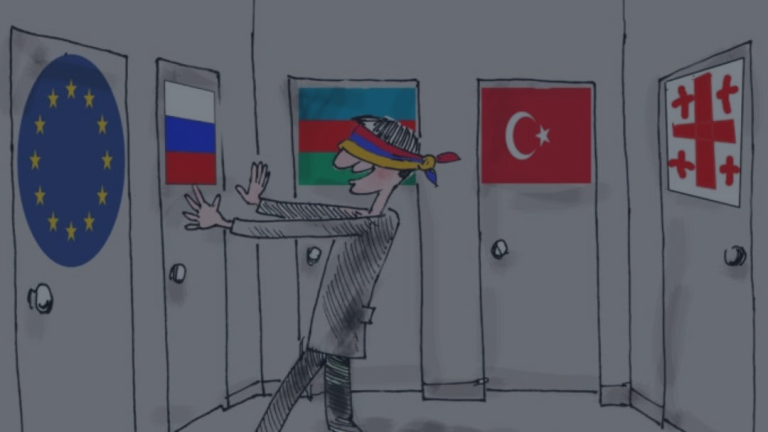
Armenia’s relationship with the EU has entered a “new and more ambitious phase” with the adoption of the Strategic Agenda for the EU-Armenia Partnership in December 2025.26 This framework builds upon the Comprehensive and Enhanced Partnership Agreement (CEPA) and seeks to elevate cooperation to a
strategic level.14 A core objective of this agenda is the diversification of Armenia’s trade and the modernization of its economy, which remains vulnerable to regional instability and climate shocks.28
The Armenian food system is dominated by small, fragmented, rain-fed farms with limited access to modern technology.15 The country is expected to experience severe weather changes in the coming decades, making the institutionalization of resilient food practices a priority.15 To support these efforts, the
EU’s Resilience and Growth Plan provides €270 million for the period 2024-2027, with €200 million dedicated to a socio-economic reform agenda and €70 million in investment grants for trade, energy, and transport infrastructure.29
| Priority Area | Short-term Goal (3-4 Years) | Medium-term Goal (7 Years) |
| Trade Diversification | Quality infrastructure alignment | Full regulatory alignment in key sectors29 |
| Resilience | Disaster risk management (WFP) | Shock-responsive social protection15 |
| Governance | Anti-corruption institutions | Full CEPA implementation14 |
The Strategic Agenda also includes security and defense as new areas of cooperation, reflecting the reality that agricultural stability in the South Caucasus is inseparable from regional security.26 The EU’s commitment to Armenia includes support for demining and regional confidence-building measures, which are essential for restoring agricultural production in conflict-affected areas.26
Azerbaijan: Agriculture in a Resource-Driven Economy
Azerbaijan occupies a distinct position in the EaP due to its heavy reliance on oil and gas, which account for roughly 90% of export revenue.30 However, the government has targeted agriculture as one of four non-oil sectors for diversification.16 The EU-Azerbaijan relationship is currently anchored by a 2022 Memorandum of Understanding to double gas exports to Europe by 2027, yet the agricultural sector is increasingly seen as a vital area for future cooperation.16
A critical driver of Azerbaijan’s integration into the global agrifood market is the development of the “Middle Corridor” (Trans-Caspian International Transport Route). This multimodal route allows for the movement of goods between the EU and Central Asia, avoiding Russia.17 Azerbaijan’s investment in its rail and port infrastructure is intended to facilitate the export of non-oil products, including agricultural commodities.17
| Indicator | Value/Status | Context |
| Oil/Gas Revenue | 90% of exports | Dominant economic driver30 |
| Agricultural Employment | ~33% of workforce | Characterized by low productivity16 |
| EU Trade (2024) | Largest trading partner | Strategic focus on connectivity 17 |
| Gender Pay Gap | 40% average | Present across all economic sectors16 |
The EU supports Azerbaijani companies through the EU4Business initiative, which provided funding and training to over 80,000 SMEs in the EaP region in 2024.17 For Azerbaijan, this initiative is essential for helping local producers meet European quality and safety standards, particularly in sectors such as processed vegetables and confectionery.32
Technical Harmonization: The Single Market and SPS Standards
The “heart” of integrating EaP countries into the EU agriculture system is the harmonization of technical rules. For a producer in Ukraine or Moldova to sell their goods in Berlin or Paris, they must prove that their products are as safe as those produced within the Union. This is achieved through the adoption of the EU’s acquis communautaire in Chapter 11 (Agriculture and Rural Development) and Chapter 12 (Food Safety, Veterinary and Phytosanitary Policy).2
The Role of SPS and TBT in Market Access
Sanitary and Phytosanitary (SPS) measures aim to protect a country from the spread of animal and plant diseases, while also ensuring that food products are compliant with sanitary standards.34 For the EaP countries, this requires:
1. Laboratory Capacity: Building and certifying laboratories that can conduct the specific tests required by the EU.19
2. Traceability: Implementing systems that track a product from the farm to the consumer.21 3. Institutional Reform: Establishing independent and authoritative food safety agencies with the power to enforce regulations.19
In Ukraine, the government exercises three types of border control: sanitary, veterinary, and phytosanitary.34 Veterinary and sanitary control is obligatory for the export of animals, reproductive
material, and animal products such as meat, eggs, milk, fish, and honey.34 The EU-Georgia agreement provides a similar framework, removing customs duties on industrial goods but maintaining an “entry price” system for certain fruits and vegetables to prevent market distortion.25
Land Reform and the CIS Legacy
The transition from a collective agricultural system to a market-oriented one remains a primary hurdle in many EaP states. Of all the CIS countries, only Belarus continues to prohibit the private ownership of agricultural land (with minor exceptions for household plots).35In Russia, Ukraine, and Belarus, the “privatization” of land has often been limited to the issuance of land shares without the accompanying rights of possession, sale, or mortgage.22
| Country | Land Ownership Status | Integration Policy Option |
| Ukraine | Transitioning to open market | Integration of cadastre and registry of rights10 |
| Moldova | Demarcated; Private | Consolidation of fragmented plots22 |
| Belarus | State Ownership (80%) | N/A (Suspended from EaP)35 |
| EU Candidates | Restitution-based | Enforce bankruptcy laws for indebted cooperatives22 |
The EU’s model of integration emphasizes the need for a functioning and transparent land market.10In Ukraine, this involves the integration of the cadastre and the registry of rights, as well as the reform of land use planning and management systems.10 The goal is to allow small farmers to use their land as collateral to secure the financing necessary for modernization.
Aligning with the European Green Deal and Farm to Fork Strategy
The European Green Deal and its associated Farm to Fork Strategy represent a paradigm shift in EU agricultural policy, emphasizing sustainability, biodiversity, and climate neutrality.4 For EaP countries, integration now means aligning not only with the CAP of the past but with the green CAP of the future.3
Climate Resilient Agriculture (CRA)
Europe’s farms are facing compound pressure from climate extremes and fluctuating input costs.3 The European Environment Agency (EEA) highlights that over the past decade, extreme climate events have resulted in crop losses 30% higher than predicted.3 Building resilience requires a move toward Climate
Resilient Agriculture (CRA), which focuses on reducing dependence on costly external inputs such as mineral fertilizers and pesticides.3
| Resilience Metric | Conventional System | Climate Resilient System |
| Tillage | Intensive | Reduced (~50% less diesel)3 |
| Production Costs | High (external inputs) | ~40% lower3 |
| Labor Needs | High | 25-30% lower3 |
| Biodiversity Land | Variable | 21% of land (EU target)7 |
For the EaP countries, aligning with the Farm to Fork Strategy involves ensuring that the food chain has a neutral or positive environmental impact.36 This includes promoting agro-ecological practices, reducing food waste, and protecting soil and water resources. The EU-wide modeling suggests that while abrupt reductions in mineral fertilizers can cause regionally uneven yield losses, highly manured systems can buffer these impacts, reinforcing the need for balanced territorial development.3
Financial Architecture: Financing the Integration
The integration of EaP countries into the EU agricultural system is supported by a multi-layered financial structure that combines grants, loans, and guarantees.
The Team Europe Spirit and Global Gateway
Team Europe remains the largest provider of official development assistance, and its strategy is now encapsulated by the Global Gateway sustainable investment strategy.1 This strategy aims to deliver tangible benefits in line with EU values, including poverty eradication and free and fair trade.1
1. The Ukraine Facility: A central pillar of support, providing €19.6 billion in 2024 alone.1 Pillar III of the facility focuses on technical cooperation to help Ukraine align with the EU acquis.8 2. The Resilience and Growth Plan for Armenia: An assistance package of €270 million for 2024-2027, designed to bolster socio-economic resilience.29
3. The Moldova Growth Plan: A €1.9 billion package for 2025-2027, aiming to catalyze private and public investments.11
4. EU4Business: A regional initiative that supported over 80,000 SMEs in 2024, helping them achieve turnover gains of 10.6% and export growth of 9.7%.31
These financial instruments are not merely aid; they are investments in the “Europeanization” of the eastern neighborhood’s economy. The support is increasingly conditional on the implementation of agreed
reforms, ensuring that the integration process is both rigorous and sustainable.29
Socio-Economic Impact and Rural Development
The integration process has profound implications for the socio-economic fabric of rural areas in the EaP region. Agriculture remains a critical source of employment, yet rural poverty remains widespread. In Ukraine, while the sector has reached high levels of export competitiveness, 34% of the rural population lives in poverty.10
The LEADER Approach and Civil Society
The EU’s LEADER approach, based on bottom-up and participatory approaches to territorial development, has been introduced across the region to empower local communities.24In Georgia, this has led to the creation of Local Action Groups (LAGs) that involve youth and women in local decision-making.24 This model is essential for ensuring that the benefits of EU integration are not captured solely by large agro-holdings but are distributed across the rural population.
The 2025 Eastern Partnership Index confirms that while Moldova, Ukraine, and Armenia have advanced in areas such as state accountability and independent media, persistent challenges remain in the fight against corruption and the independence of the judiciary.37 These governance factors are directly linked to agricultural productivity, as they determine the security of property rights and the transparency of state support programs.10
Conclusion: Toward a Pan-European Agrifood System
The integration of the Eastern Partnership countries into the European Union agricultural system is a project of historic proportions, representing the largest potential expansion of the Single Market in decades. The year 2025 has established the technical and political foundations for this transition, with the completion of screening processes and the adoption of ambitious strategic agendas.2
However, the path forward is marked by structural challenges and geopolitical risks. The dual nature of the Ukrainian agricultural sector, the vulnerability of Moldovan and Armenian smallholders to climate shocks, and the democratic backsliding in Georgia require a tailored and flexible approach from the EU. The alignment with the European Green Deal and the Farm to Fork Strategy adds a layer of complexity, demanding that these partner states not only modernize but do so in a way that respects ecological limits and promotes biodiversity.3
The successful integration of these systems will ultimately depend on the continued deployment of financial instruments like the Global Gateway and the maintenance of a rigorous, reform-based accession process. If achieved, this realignment will not only enhance the food security of the Union but will also foster the stability and prosperity of the entire European continent, creating a unified agrifood system that is resilient to the challenges of the 21st century.
Works cited
1. 2025 Annual Report on the Implementation of the European Union’s External Action
Instruments in 2024, accessed May 4, 2026,
https://www.eeas.europa.eu/sites/default/files/2026/documents/2025%20annual%20report %20on%20the%20implementation%20of%20the%20european-MN0125008ENN.pdf
2. Ukraine’s path towards EU accession – European Commission, accessed May 4, 2026, https://commission.europa.eu/topics/eu-solidarity-ukraine/ukraines-path-towards-eu-access ion_en
3. Building climate-resilient agriculture in Europe: an economic perspective | Publications, accessed May 4, 2026,
https://www.eea.europa.eu/en/analysis/publications/building-climate-resilient-agriculture-i n-europe-an-economic-perspective
4. Trade aspects of the Strategic Dialogue on the future of EU agriculture and the impact of trade on the competitiveness and sustainability of European, accessed May 4, 2026, https://www.europarl.europa.eu/RegData/etudes/STUD/2025/754468/EXPO_STU(2025)7 54468_EN.pdf
5. Full article: Breaking the rural underdevelopment trap? Eastern Enlargement, agricultural policy and lessons for Ukraine – Taylor & Francis, accessed May 4, 2026, https://www.tandfonline.com/doi/full/10.1080/13501763.2025.2486079
6. Eastern Partnership – Enlargement and Eastern Neighbourhood – European Union, accessed May 4, 2026,
https://enlargement.ec.europa.eu/european-neighbourhood-policy/eastern-partnership_en 7. Common Agricultural Policy – Performance – European Commission, accessed May 4, 2026,
https://commission.europa.eu/strategy-and-policy/eu-budget/performance-and-reporting/pr ogramme-performance-statements/common-agricultural-policy-performance_en 8. Ukraine – Enlargement and Eastern Neighbourhood – European Commission, accessed May 4, 2026, https://enlargement.ec.europa.eu/countries/ukraine_en
9. Potential enlargement of the European Union – Wikipedia, accessed May 4, 2026, https://en.wikipedia.org/wiki/Potential_enlargement_of_the_European_Union
10. of the Commission Implementing Decision on the financing of the Annual Action
Programme, part 1, in favour of Ukraine for 2020 – Enlargement and Eastern Neighbourhood, accessed May 4, 2026, https://enlargement.ec.europa.eu/system/files/2020-05/c_2020_3294_f1_annex_en_v1_p1 _1079333.pdf
11. Moldova – Enlargement and Eastern Neighbourhood – European …, accessed May 4, 2026, https://enlargement.ec.europa.eu/countries/moldova_en
12. 2025 EU Enlargement Reports: Progress, Challenges, and Disability Rights in Ukraine, Moldova, and Georgia, accessed May 4, 2026,
https://www.edf-feph.org/2025-eu-enlargement-reports-progress-challenges-and-disability rights-in-ukraine-moldova-and-georgia/
13. New 2025 EU enlargement reports on Ukraine, Moldova and Georgia – EASPD, accessed May 4, 2026,
https://easpd.eu/news-detail/new-2025-eu-enlargement-reports-on-ukraine-moldova-and-g eorgia/
14. Unprecedented deepening of partnership, Armenia–EU Summit, and Yerevan’s European prospects: Interview with Ambassador Vassilis Maragos – ARMENPRESS Armenian
News Agency, accessed May 4, 2026, https://armenpress.am/en/article/1249041 15. Draft Armenia country strategic plan (2026–2030) – WFP Executive Board, accessed May 4, 2026, https://executiveboard.wfp.org/document_download/WFP-0000171145 16. Azerbaijan diagnostic – EBRD, accessed May 4, 2026,
https://www.ebrd.com/content/dam/ebrd_dxp/assets/pdfs/country-strategies/azerbaijan/Aze rbaijan-country-diagnostic-2024.pdf
17. Azerbaijan – Enlargement and Eastern Neighbourhood – European Commission, accessed May 4, 2026, https://enlargement.ec.europa.eu/countries/azerbaijan_en
18. 2025 EU Enlargement Report on Georgia – EEAS – European Union, accessed May 4, 2026,
https://www.eeas.europa.eu/delegations/georgia/2025-eu-enlargement-report-georgia_en?s =221
19. Publication: Ukraine Agricultural Competitiveness – Open Knowledge Repository, accessed May 4, 2026,
https://openknowledge.worldbank.org/entities/publication/cd4b3502-9e8c-5775-8774-311 37991736b
20. EU trade relations with Ukraine, accessed May 4, 2026,
https://policy.trade.ec.europa.eu/eu-trade-relationships-country-and-region/countries-and-r egions/ukraine_en
21. Publication: Moldova Trade Study: Note 3. Competitiveness in …, accessed May 4, 2026, https://openknowledge.worldbank.org/entities/publication/ab176aa0-b2f6-5392-85c3-3885 3a268ad5
22. VI. Analysis and Policy Options – Land Reform in Eastern Europe – Western CIS, Transcaucuses, Balkans, and EU Accession Countries, accessed May 4, 2026, https://www.fao.org/4/ad878e/AD878E08.htm
23. Country Economic Memorandum : Charting Georgia’s Future, accessed May 4, 2026, https://documents1.worldbank.org/curated/en/099435012022237049/pdf/P17548605921fd 062093cb077bd2d45cd13.pdf
24. of the Commission Implementing Decision on the Annual Action Programme 2019 in favour of Georgia Action Document for the Europe – Enlargement and Eastern Neighbourhood, accessed May 4, 2026,
https://enlargement.ec.europa.eu/system/files/2020-12/annex3_enpard_iv.pdf 25. EU-Georgia Deep and Comprehensive Free Trade Area | Access2Markets, accessed May 4, 2026,
https://trade.ec.europa.eu/access-to-markets/en/content/eu-georgia-deep-and-comprehensiv e-free-trade-area
26. Armenia–EU Partnership Strategic Agenda – mfa.am, accessed May 4, 2026, https://www.mfa.am/en/press-releases/2025/12/03/Armenia_EU_StrategicAgenda/13649 27. Armenia–EU Comprehensive and Enhanced Partnership Agreement – Wikipedia, accessed May 4, 2026,
https://en.wikipedia.org/wiki/EU-Armenia_Comprehensive_and_Enhanced_Partnership_A greement_(CEPA)
28. Armenia Country Strategy – 2025-2030 – EBRD, accessed May 4, 2026, https://www.ebrd.com/content/dam/ebrd_dxp/assets/pdfs/country-strategies/armenia/count ry-strategy-armenia-2025-30.pdf
29. STRATEGIC AGENDA FOR THE EU-ARMENIA PARTNERSHIP BETWEEN THE EUROPEAN UNION AND ARMENIA, accessed May 4, 2026,
https://www.mfa.am/filemanager/%D5%80%D5%80-%D4%B5%D5%84/Strategic%20Ag enda%20for%20the%20EU-Armenia%20Partnership.pdf
30. 2024 Investment Climate Statements: Azerbaijan – State Department, accessed May 4, 2026, https://www.state.gov/reports/2024-investment-climate-statements/azerbaijan 31. Annual R eport – EU NEIGHBOURS east, accessed May 4, 2026,
https://euneighbourseast.eu/wp-content/uploads/2026/01/6741271d2649e4d13d37a34c60c 8730e.pdf
32. Poland and Azerbaijan develop their cooperation in the agri-food sector – Trade.gov.pl, accessed May 4, 2026,
https://www.trade.gov.pl/en/news/poland-and-azerbaijan-develop-their-cooperation-in-the agri-food-sector/
33. European Commission publishes analytical reports on Ukraine …, accessed May 4, 2026, https://enlargement.ec.europa.eu/news/european-commission-publishes-analytical-reports ukraine-moldova-and-georgias-alignment-eu-acquis-2023-02-02_en
34. EU-Ukraine Deep and Comprehensive Free Trade Area | Access2Markets, accessed May 4, 2026,
https://trade.ec.europa.eu/access-to-markets/en/content/eu-ukraine-deep-and-comprehensiv e-free-trade-area
35. II. CIS Countries: Western CIS States (Belarus, Ukraine, Russia, Moldova) – Food and Agriculture Organization, accessed May 4, 2026,
36. EU Policies on “Sustainable Food Systems”, accessed May 4, 2026, https://knowledge4policy.ec.europa.eu/global-food-nutrition-security/topic/sustainable-foo d-systems/navigation-page/eu-action-sustainable-food-systems/eu-policies-sustainable-foo d-systems_en
37. Eastern Partnership Index 2025: Performance, Progress and Pushback on the Road to the EU, accessed May 4, 2026,
https://eap-csf.eu/articles/eastern-partnership-index-2025-performance-progress-and-pushb ack-on-the-road-to-the-eu/
38. The Eastern Partnership Index 2025 – AFEW International, accessed May 4, 2026, https://afew.org/the-eastern-partnership-index-2025/